
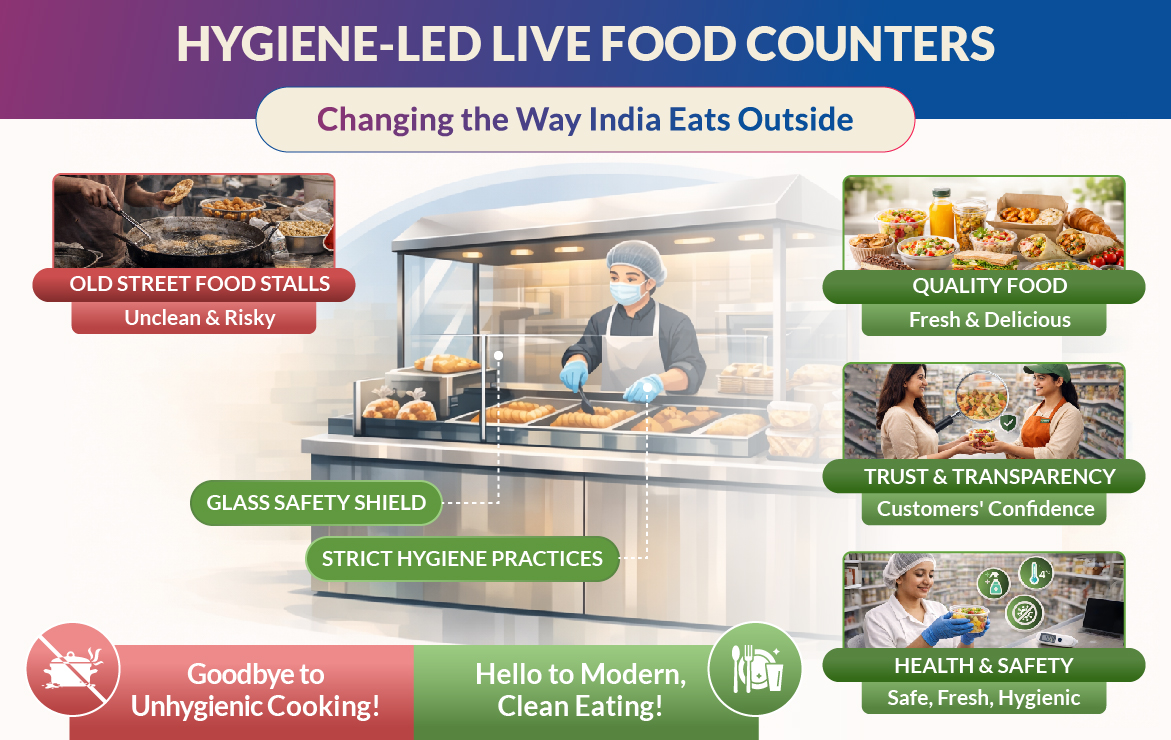
India’s love for street food is unmatched. From chaat and snacks to freshly prepared comfort food, eating outside has always been an integral part of daily life. However, growing concerns around hygiene, food safety, and consistency have significantly influenced how consumers choose where and what to eat. This shift in consumer mindset has given rise to hygiene-led live food counters, a model that is redefining the way India eats outside.
Traditionally, street food has been associated with great taste but uncertain cleanliness. While flavours remain irresistible, customers especially families and working professionals have become more cautious. They want food that is not only fresh and tasty but also prepared in a clean, controlled environment. Hygiene-led live food counters address this gap by combining live preparation with structured hygiene protocols.
The most powerful element of this model is transparency. Customers can see their food being prepared right in front of them, which builds trust instantly. Clean counters, uniformed staff, gloves, hair caps, and standardised processes reassure customers that hygiene is not an afterthought, but a priority. This visibility creates confidence and encourages repeat visits.
Another major advantage is consistency. In unorganised street food setups, taste and quality often vary from day to day. Hygiene-led counters operate on standardised recipes and processes, ensuring that customers experience the same taste and quality every time they visit. This reliability transforms casual eating into a dependable habit rather than an occasional indulgence.
Live food counters also play a crucial role in impulse consumption. The aroma, visual appeal, and freshness of food being prepared trigger immediate cravings. When placed within an organised retail environment, these counters not only increase footfall but also extend customer dwell time, leading to higher overall spending.
For businesses, hygiene-led live counters offer operational advantages. Structured SOPs, controlled sourcing of raw materials, and regular quality checks reduce risks associated with food safety. Staff training and system-driven workflows make operations easier to manage and scale, even across multiple locations.
From a broader perspective, this model reflects India’s evolving relationship with food. Consumers no longer want to choose between taste and safety—they expect both. Hygiene-led live food counters deliver the authenticity of street food while meeting modern standards of cleanliness and accountability.
Brands like I LOVE STORE are leading this transformation by integrating hygienic live food counters with everyday grocery retail. This approach allows customers to enjoy freshly prepared food while trusting the same store for their daily essentials. The result is a high-frequency, trust-driven ecosystem that benefits both customers and business partners.
As awareness around health, hygiene, and food quality continues to grow, hygiene-led live food counters are not just a trend, they are the future of eating outside in India.